

How to select the right laser cutting nozzle?
Focusing on the Key—The Overlooked Core of the Process
A common scene in the workshop: an operator frowns at the parameter screen—"Gas pressure, speed, power—all unchanged. Why was the cut perfect yesterday but rough today?" The problem often lies not in the complex control system, but in that small component worth only a few dollars, often treated as a mere "consumable"—the laser cutting nozzle.
The nozzle is the "last millimeter" actuator of the laser cutting process, converting gas parameters into actual cutting force. The difference between an excellent nozzle and an ordinary one determines cutting quality at the microscopic level. It precisely controls the shape, pressure, and direction of the gas flow. Any minor wear or improper selection directly leads to irregular stripes on the cut surface, increased dross, or a sharp decrease in lens (OR PROTECTION WINDOWS)life. Neglecting nozzle selection and maintenance is like using inferior tires on a top-tier race car—no amount of power can translate into superior performance.
Understanding the Nozzle—More Than Just a "Copper Tip"
At its core, a laser cutting nozzle serves as the final, precision gateway for the assist gas. Its fundamental mission is threefold: to expel molten slag efficiently, to protect the focusing lens reliably, and to dictate the quality and characteristics of the cut edge. It accomplishes this by meticulously controlling the velocity, shape, and pressure distribution of the gas flow directed into the kerf. Choosing the right nozzle is not merely a matter of fitment; it is about selecting the optimal "gas scalpel" for your specific material and quality requirements.
1. Single-Layer Standard Nozzle: The Workhorse for Efficiency
The single-layer nozzle, characterized by its straightforward conical or cylindrical single-channel design, operates on a direct principle: high-pressure gas is accelerated and ejected through a single orifice.
Conical internal geometry for high pressure, non-ferrous cutting applications using nitrogen, air or argon
Cylindrical internal geometry for low pressure, mild steel cutting applications using oxygen.
Slag Removal: It generates a high-velocity, concentrated jet. This jet effectively shears and blows molten material downward through the kerf. For materials like carbon steel where the cut relies on an exothermic reaction (oxygen cutting), this robust gas stream is excellent for clearing the viscous iron oxide slag.
Lens Protection: Its protection mechanism is primarily based on positive pressure and directional flow. The high-speed gas exiting the nozzle creates a zone of pressure that helps deflect spatter upwards. However, as the gas flow is more divergent, this protective barrier is less focused compared to a double-layer nozzle.
Cut Edge Control: The gas flow influences the cut edge by cooling it and affecting the fluid dynamics of the melt pool. It typically produces a good, functional cut. However, due to greater gas diffusion, maintaining a perfectly consistent, high-pressure environment at the bottom of a deep kerf (in thick materials) or achieving an oxidation-free finish on stainless steel is more challenging.
Best Suited For: This nozzle is the economical and robust choice for oxygen cutting of carbon steel (particularly above 3mm where slag volume is high) and for compressed air cutting of non-metals or thin decorative metals. It excels in applications where cutting speed and operational cost are prioritized over a perfectly smooth, oxidation-free edge.
2. Double-Layer High-Precision Nozzle: The Guardian of Quality
The double-layer nozzle is an engineering solution for precision, featuring a coaxial dual-channel design. The inner channel delivers the primary high-pressure cutting gas (e.g., high-purity Nitrogen), while the outer channel dispenses a secondary shielding gas (often air or nitrogen) at a lower pressure.
Slag Removal & Edge Quality: The key here is the "gas curtain" effect. The outer ring of gas acts as a sheath, collimating and focusing the inner high-speed cutting gas into a more coherent, longer, and stable jet. This delivers sustained high dynamic pressure to the bottom of the cut, resulting in superior slag expulsion—especially for the sticky melt in stainless steel or aluminum—and enables a clean, dross-free, and often bright (oxide-free) cut edge with excellent verticality.
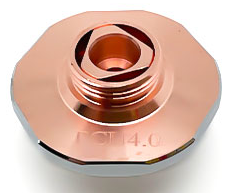
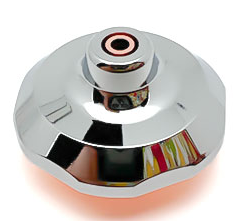
Lens Protection: This is where the double-layer design shines. The outer gas curtain forms a stable, concentric barrier that actively isolates the lens from spatter and plasma plumes. It significantly reduces the amount of contaminants reaching the protective window, extending lens life by multiples compared to single-layer nozzles. This is critical when cutting highly reflective materials (like copper or brass) where intense back-reflection can damage components.
Process Stability: The sheath gas also helps in stabilizing the cutting process by insulating the nozzle tip from extreme thermal feedback from the kerf, preventing premature heating and wear.
Indispensable For: This nozzle is essential for nitrogen bright-surface cutting of stainless steel and aluminum alloys, where maintaining an inert, high-pressure atmosphere in the kerf is non-negotiable. It is also the strongly recommended choice for cutting highly reflective materials and for any application demanding the highest levels of cut edge smoothness, perpendicularity, and consistency.
Two Decisive Parameters for Nozzle Selection
Parameter One: Caliber—Bigger Isn't Better; Matching Is Key.
Orifice selection is a balance between gas dynamics and material thermodynamics. A key misconception is that a large diameter can "handle everything." In reality, using a Φ3.0mm nozzle to cut 1mm thin sheet metal results in severely insufficient gas velocity, leading to wide kerfs and sheet overheating/deformation.
|
Material Thickness Range |
Recommended Caliber |
Primary Goal |
|
Thin Sheet (<3mm) |
Φ1.0 - Φ1.5mm |
High speed, narrow kerf, preventing excessive heat spread. |
|
Medium-Thick Plate (3-10mm) |
Φ2.0 - Φ2.5mm |
Prioritize stability, balancing penetration and slag removal capability. |
|
Thick Plate (>10mm) |
Φ3.0 - Φ4.0mm |
High-volume slag removal, ensuring sufficient gas at the bottom of the cut to clear molten material. |
Standoff Distance—The Dynamic "Lifeline".
Nozzle standoff distance (H) is one of the most frequently adjusted process parameters, directly affecting gas pressure on the material surface and cutting stability. But this is just the starting point. Dynamic adjustment is needed during actual cutting: increase the distance appropriately when cutting thick plates to provide space for slag ejection; decrease the distance (down to 0.5*D) when performing bright surface cutting of stainless steel to maintain high-pressure gas protection of the kerf.
Choosing Based on Your Cutting Task
Scenario One: Carbon Steel Oxygen Cutting — Pursuing Ultimate Efficiency Raysoar HHS HHB series
High power high speed bright surface cutting, to realize full power ultra bright surface cutting of carbon steel with oxygen. HHB series is suitable for 6-8KW fiber laser cutting (Raysoar P/N LHAN02).
HHS series is more suitable for 12-15KW fiber laser cutting (Raysoar P/N LXLN02/08 LHAN08).
ST serues is suitable for >20kw fiber laser cutting machine (Raysoar P/N LHAN07)
In this scenario, the cost-effective single-layer nozzle is the first choice. For stable cutting of medium-thick plates (8-30mm), if you want to further optimize the cut surface and reduce dross, consider a process upgrade: adopting a Raysoar mixed gas generator (e.g., nitrogen-oxygen mix). Mixed gas optimizes the combustion reaction, potentially improving quality while balancing overall costs through parameter fine-tuning. During operation, observing the spark spray direction is a simple and effective diagnostic—ideally, sparks should spray vertically downwards.
Scenario Two: Stainless Steel Nitrogen Bright Surface Cutting — Pursuing Perfect Quality.
ECU Series High speed and economic cutting through double air passages to realize high speed, stable and economic cutting of stainless steel with nitrogen.(Raysoar P/N LHGN02)
This is the most demanding scenario in terms of process requirements. First, a double-layer nozzle is mandatory, as it's the physical foundation for achieving an oxidation-free, bright surface. Second, gas source stability and purity are the lifeline; purity below 99.99% or excessive pressure fluctuation will directly cause the cut surface to blacken. The Raysoar high-purity nitrogen generator provides a continuous, stable gas source, forming the cornerstone for ensuring consistent quality over thousands of cuts. In this scenario, the nozzle standoff should be lower rather than higher, and the cutting machine requires good following stability.
Scenario Three: Compressed Air Cutting — Controlling Overall Costs
BST Series Single layer high speed and economic cutting realizes high speed, stable and economic cutting of stainless steel and aluminum alloy with nitrogen. (Raysoar P/N LCTN03)
For cutting non-metallic materials or decorative thin metals, a single-layer standard nozzle with compressed air is a cost-control solution. However, the greatest risk comes from water and oil in untreated compressed air, which can contaminate lenses, alter cut characteristics, and damage the nozzle. Therefore, investing in a professional laser-cutting dedicated air compression system (like the Raysoar Pure Air Cutting integrated solution) to ensure dry and clean air is a necessary investment to avoid greater losses.
Scenario Four:Carbon Steel Mix-gas Cutting — Pursuing ultimate efficiency and quality
BST Series Single layer high speed and economic cutting realizes high speed, stable and economic cutting of stainless steel and aluminum alloy with nitrogen. (Raysoar P/N LCTN03)
When selecting nozzles for mixed gas cutting, the main purpose is to enhance the concentration of the gas flow, increase the cutting speed and the quality of the cut surface; and to reduce the adhesion between the nozzle and the slag, thereby extending the service life. Raysoar HCP (hard chrome-coated) nozzles is recommended.
Priority should be given to the selection of Laval nozzles to increase the airflow velocity; anti-sticking coated nozzles.
Use, Maintenance, and Troubleshooting
Three-Minute Daily Maintenance Checklist
Consistent simple maintenance can greatly extend nozzle life and ensure cutting stability:
1.Pre-shift Visual and Tactile Check: Inspect if the nozzle orifice is round and smooth; feel for any burrs or damage.
2.Weekly Deep Cleaning: Always use a dedicated brass cleaning pin for gentle cleaning. Absolutely avoid using hard objects like iron wire or steel pins that can scratch the inner wall.
3.Concentricity Calibration:Use a centering tool to calibrate the concentricity between the laser beam and the nozzle. This is fundamental for ensuring cutting uniformity.
Precise Troubleshooting Guide for Common Issues
When encountering cutting quality problems, follow this logic for troubleshooting:
Rough Cut Surface with Diagonal Stripes: First, check if the nozzle orifice is worn into an oval shape or has defects—this is the most common cause. Then, verify if the nozzle standoff distance is appropriate and confirm concentricity. If the problem persists, trace back to the gas source and check for stability in gas purity and pressure.
Severe Bottom Dross: First, confirm if the pressure gauge reading meets process requirements and check for air leaks in the gas line. Next, evaluate if the current nozzle orifice diameter is too small for the material thickness and try increasing by one size. Finally, consider whether the issue stems from mismatched energy input due to overly slow speed or insufficient power, based on the cutting state.
Abnormal Nozzle Burning: If cutting highly reflective materials, first confirm whether a single-layer nozzle was mistakenly used. Next, check if the beam center is severely misaligned and recalibrate the cutting head. In oxygen cutting scenarios, also investigate whether oxygen purity is too low, as incomplete combustion causes heat to reflect upwards, eroding the nozzle.
Precise Selection, Immediate Results
In essence, selecting the ideal laser cutting nozzle is a systematic process of matching the most precise "pneumatic interface" to your unique combination of material, assist gas, and laser power. Success hinges on a clear, three-step selection logic that addresses the core variables:
Type: The Foundational Decision. Your first and most critical choice is between a Single-Layer and a Double-Layer nozzle. This decision is dictated by your material and quality target.
Choose a Single-Layer Nozzle for cost-effective, high-speed processing of carbon steel with oxygen, or for non-metals with air, where maximum cut speed is the priority.
A Double-Layer Nozzle is non-negotiable for achieving oxidation-free, bright cuts on stainless steel or aluminum with nitrogen, and is essential for safely and effectively processing highly reflective metals like copper. It is the cornerstone of precision and lens protection.
Caliber: The Key to Energy Focus. The caliber controls the gas flow's velocity and volume, directly impacting the cut's energy density and slag clearance capability.
Small calibers (e.g., Φ1.0-1.5mm) concentrate energy for clean, narrow kerfs in thin sheets (<3mm).
Medium calibers (e.g., Φ2.0-2.5mm) offer the best balance for stable, high-quality cuts in mid-range thicknesses (3-10mm).
Large calibers (e.g., Φ3.0-4.0mm) provide the high-volume flow needed to forcefully eject slag from thick plates (>10mm).
Standoff Distance: The Dynamic Fine-Tuner. This is not a set-and-forget parameter. The distance from the nozzle to the workpiece must be actively managed to maintain optimal gas pressure at the cut point.
It requires dynamic adjustment based on material thickness and cutting phase—starting higher for safety, optimizing lower for quality during cutting, and adapting for different materials.
Precise control here is what transforms a good cut into a perfect one, ensuring clean edges and preventing nozzle strikes.
Mastering these three pillars—Type, Diameter, and Height—empowers you to systematically solve cutting quality issues and unlock your machine's full potential.
Partner with Raysoar: From Precise Selection to Guaranteed Performance
Selecting a laser cutting nozzle is essentially about matching the most suitable "pneumatic interface" for your material, gas, and power system. A clear selection logic is crucial: first, determine the single or double-layer type based on material properties and quality requirements; then, select the optimal orifice diameter based on material thickness and cutting goals; finally, finely tune the standoff distance during dynamic cutting to find the balance between stability and effectiveness.
Shanghai Raysoar Electromechanical Equipment Co., Ltd. (Raysoar) deeply understands that exceptional cutting results stem from the synergistic stability of the entire process chain from the gas source to the nozzle. We not only provide high-quality nozzle products but also offer professional support covering stable gas source solutions (high-purity nitrogen, mixed gases, dry clean air) and on-site process optimization, ensuring the "last millimeter" of your equipment always performs at its peak.
Let our expertise safeguard the perfection of this "last millimeter" for you.
Visit https://www.raysoarlaser.com/ to obtain a dedicated process diagnosis and optimization plan.