

Cutting Quality Does Not Depend on Nozzles and Lenses Alone
Why the electro-pneumatic proportional valve is the hidden variable in laser cutting — and how to diagnose it correctly
On the shop floor, the same scenario repeats itself: the machine is running normally, and then cutting quality deteriorates abruptly — the cut face covered in dross, piercing blowing out repeatedly. The operator's first assumption is a damaged nozzle or a contaminated protective lens, so nozzles and protective windows are replaced again and again. Consumables are consumed and costs accumulate, yet the fault keeps returning.
What is overlooked in most of these cases is one key component: the electro-pneumatic proportional valve. It is compact, yet it governs the pressure output of the cutting assist gas. When it operates abnormally, no replacement of nozzles or lenses will restore cut quality.
This article sets abstract concepts aside and addresses three practical questions: why proportional-valve faults are so often misdiagnosed as nozzle faults; how to distinguish the two quickly; and how to judge whether a proportional valve is worth specifying.
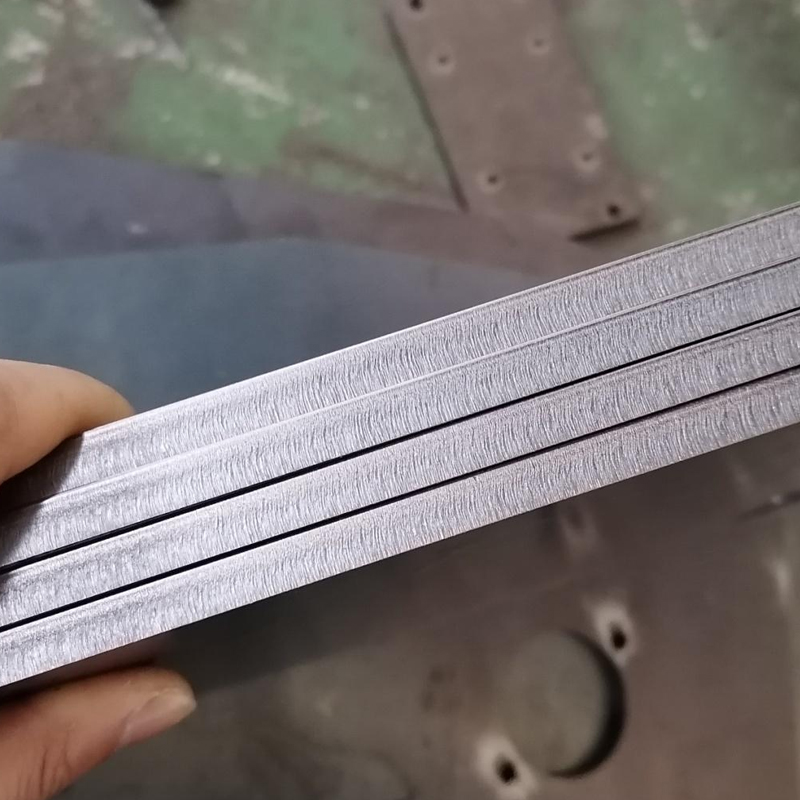
1. Why Proportional-Valve Faults Are So Often Misread as Nozzle Faults
In laser cutting, the nozzle constrains the shape of the gas flow, while the proportional valve determines the stability and the response speed of the output pressure — it is the element that matches the machine's process commands. The two perform different functions, yet their failure symptoms overlap almost completely: dross, rough cut faces, unstable piercing. These are precisely the symptoms where field engineers most often misjudge the root cause.
Once the diagnosis is wrong, every subsequent action is wrong as well: nozzles and lenses are replaced repeatedly, which consumes time and raises cost per part, while the real problem — pressure control in the gas path — is never addressed.
2. Cutting Head or Gas Path? Two Fault Patterns, Two Conclusions
Before replacing any part, establish where the problem lies. Nozzle faults and proportional-valve faults can be separated by three observable characteristics:
|
Characteristic |
Nozzle fault |
Proportional-valve fault |
|
Typical symptom |
Impact deformation, orifice wear |
Abnormal pressure control in the gas path |
|
Occurrence pattern |
Consistent defects on a given sheet; the problem is stable and persistent |
Intermittent: good one moment, poor the next |
|
Behaviour with identical parameters |
Results remain stable |
Noticeable fluctuation across sheets and batches |
3. How to Judge Whether a Proportional Valve Is Worth Specifying
• Strong dynamic response. Pressure commands change constantly during cutting. The valve's response speed directly determines whether gas pressure keeps up through piercing, corners and lead-ins. A slow valve lags behind the command, and the cut face shows visible fluctuation.
• Excellent control accuracy and linearity. Pressure output corresponds one-to-one with the command. High linearity means process parameters are reproducible: the same parameter set delivers consistent results across different sheets and batches — the single most important property in series production.
• Broad pressure-spec coverage. From thin plate to thick plate, from machines of different power classes to a variety of gas media, a matching pressure specification is always available, so selection requires no compromise.
• Durable hardware and strong adaptability to working conditions. Laser cutting environments are demanding — dust, temperature and vibration. The sealing and materials of the valve body determine long-term reliability; durable hardware means fewer stoppages and lower maintenance costs.
• Intelligent commissioning and diagnostics. Fast commissioning and fault diagnosis sharply reduce on-site troubleshooting time, so operators are not forced to work by trial and error.
• High industry maturity. Only a technical solution validated in a large number of real installations can be called stable. High industry maturity means the common pitfalls have already been identified and resolved.
4. Electro-Pneumatic Proportional Valves
Gas-path pressure control is the hidden variable in cutting quality — and laserein electro-pneumatic proportional valves are engineered specifically for this function.
Strong dynamic response: rapid reaction, pressure commands met the moment they are issued, minimal pressure lag, a more stable cut face. Excellent control accuracy and linearity: pressure output corresponds precisely to the command, so series production no longer depends on chance. Broad pressure-spec coverage: every power class of laser machine can be matched, from thin to thick plate, across power ranges and gas media, with no compromise in selection.
The valves are also built for durability, with strong adaptability across working conditions, which lowers long-term maintenance costs. Fast commissioning and fault diagnosis are supported, returning troubleshooting time to production. And industry maturity is high: LASERIEN proportional valves are already in stable operation at numerous laser cutting sites, with a mature and reliable technical solution that saves you detours.
The key to stable cutting quality is often hidden in the gas path. Specifying a LASERIEN electro-pneumatic proportional valve adds a dependable pressure insurance to every process step.
For selection options and adaptation recommendations for the electro-pneumatic proportional valves from Raysoar, please contact us right away at [email protected] or whatsapp +8613310161908.